In England and Wales, it is an offence to intentionally take, damage or destroy a wild bird’s nest while it is in use or being built, and all bat species and their roosts are protected, even when the bats aren’t there. If birds are nesting in or near your gutters, wait until they have finished. If you think bats roost in your eaves, get advice before any work.
In this guide
- What does the law say about nesting birds?
- Which birds nest in gutters and eaves?
- How do I know if birds are nesting?
- What does the law say about bats?
- Can I clear my gutters if bats roost in the eaves?
- What should I do if a nest is blocking a gutter?
- How do I plan gutter work around wildlife?
- Does Full View work around nests?
- What else lives in gutters?
- Quick questions
What does the law say about nesting birds?
Under section 1 of the Wildlife and Countryside Act 1981, it is an offence to intentionally take, damage or destroy the nest of any wild bird while it is in use or being built.
That covers common garden birds as well as rare ones. It applies whatever the date: what matters is whether the nest is in use or being built. Once the young have left and the nest is no longer in use, it can usually be removed, with some exceptions for particular species. If in doubt, wait.
Which birds nest in gutters and eaves?
House sparrows, starlings, house martins, swifts and pigeons commonly use gaps in the eaves, behind fascias and in gutters.
House martins build mud nests under the eaves. Swifts and starlings use gaps at the eaves and under tiles. Sparrows nest in gaps behind fascias and soffits, and sometimes in blocked gutters. Pigeons nest on ledges and in gutters, sometimes at any time of year.
How do I know if birds are nesting?
Watch for a while. Birds flying in and out of the same spot, carrying nest material or food, or the sound of chicks, are clear signs.
Spend ten minutes watching the roofline on a spring or summer morning. Note where birds land and disappear. Droppings building up below one spot, or nest material hanging out of a gap, are also signs. Tell your gutter cleaner what you have seen when you book.
What does the law say about bats?
All UK bat species and their roosts are protected. Under regulation 43 of the Conservation of Habitats and Species Regulations 2017, it is an offence to damage or destroy a bat roost, and a roost is protected even when bats aren’t present.
The Bat Conservation Trust notes that bats can roost above soffits and behind fascia boards, and in other small gaps in buildings. You may never see them. Signs include small droppings stuck to walls or windows below a gap, or bats emerging at dusk.
Can I clear my gutters if bats roost in the eaves?
Clearing debris from the gutter channel itself is usually separate from the roost. Any work to the fascias, soffits or roof edge needs advice first.
A gutter vacuum lifting leaves out of the gutter doesn’t usually touch the gaps behind the fascia where bats might be. But replacing fascias and soffits, sealing gaps or roof repairs could. The Bat Conservation Trust runs a National Bat Helpline that gives advice on bats and building work; get advice before work that could affect a roost.
What should I do if a nest is blocking a gutter?
If it is in use, wait. Once it has been abandoned, it can usually be cleared. Meanwhile, some overflow is the price of the law.
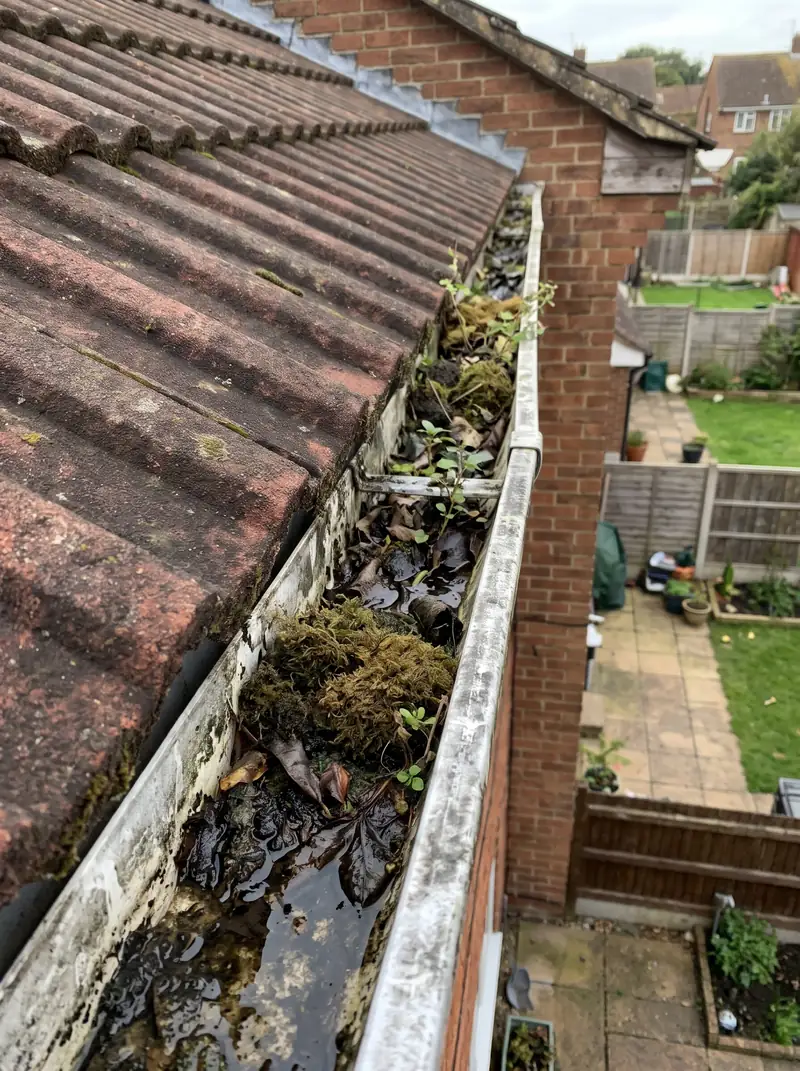
A nest in the outlet or in the gutter can stop water draining. If it is active, leave it until the birds have finished. Then clear it, and the gutter, and consider whether an outlet guard would stop it happening next year. If overflow is causing real damage while the nest is active, get advice before doing anything.
How do I plan gutter work around wildlife?
Do the main clear in late autumn and any second clear in late winter, outside the main nesting season, and check before any work in spring or summer.
This fits neatly with the usual gutter calendar: clear after leaf fall, and again before spring if you need to. See the best time of year to clean gutters. If you have house martins or swifts, they will often come back to the same place each year; plan any work to the eaves around them.
Does Full View work around nests?
Yes. If we find an active nest, we leave that part of the gutter and tell you.
Tell us when you book if you know of birds or bats. We clear gutters from the ground with a gutter vacuum, and we check them on camera first, which helps us spot nests before we start.
What else lives in gutters?
Mostly insects and the odd wasp. Wasps sometimes nest in eaves and roof spaces in summer.
Wasp nests are not protected the way birds’ nests and bat roosts are, but they are a hazard to anyone working nearby. If you see wasps going in and out of the eaves, mention it when you book, and don’t disturb the nest yourself. Bees are different again; a local beekeeping association can often advise on a swarm.
Key points
- Active bird nests are protected by law, whatever the date.
- All bats and their roosts are protected, even when bats are absent.
- Watch before you work: birds going in and out mean a nest.
- Clearing the gutter channel is different from work on fascias and soffits.
- Plan main clears for late autumn and late winter.
Quick questions
Can I put up spikes or netting?
Not over an active nest. Deterrents fitted after birds have left can be an option; get advice for bats.
Are pigeons protected?
Wild birds generally are, and their active nests are protected. There are some legal exceptions, which need specific advice.
Who do I call about bats?
The Bat Conservation Trust runs a National Bat Helpline. Their website has the details.