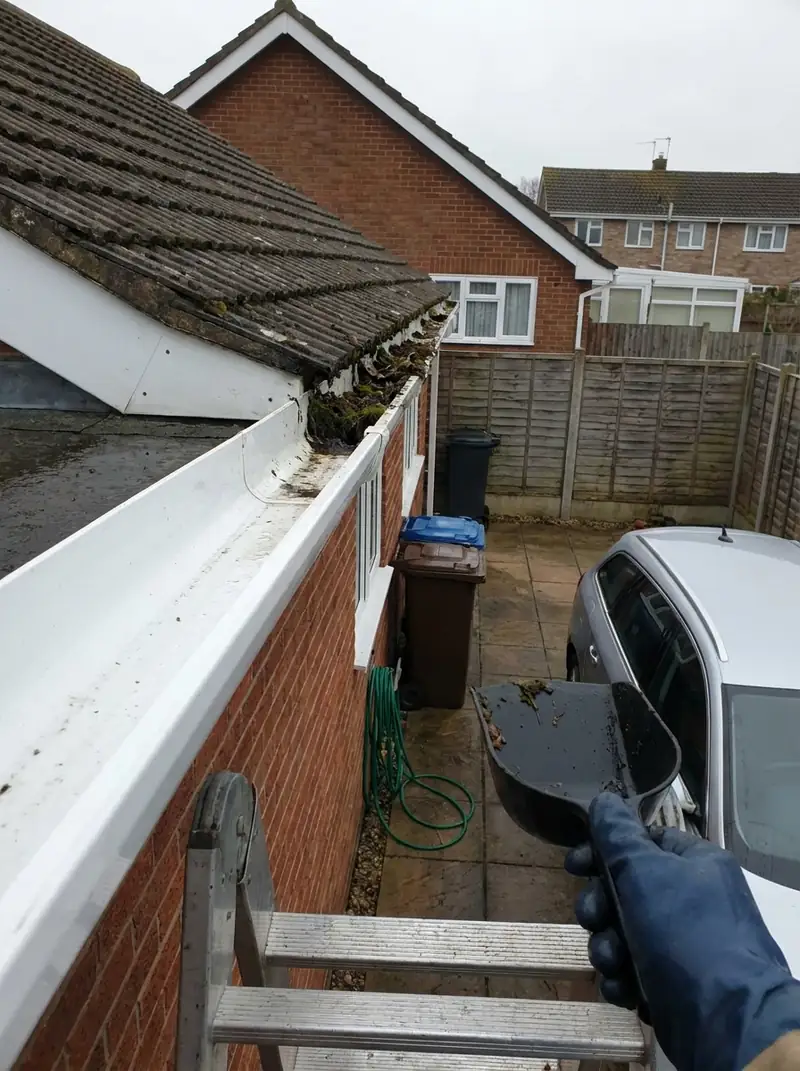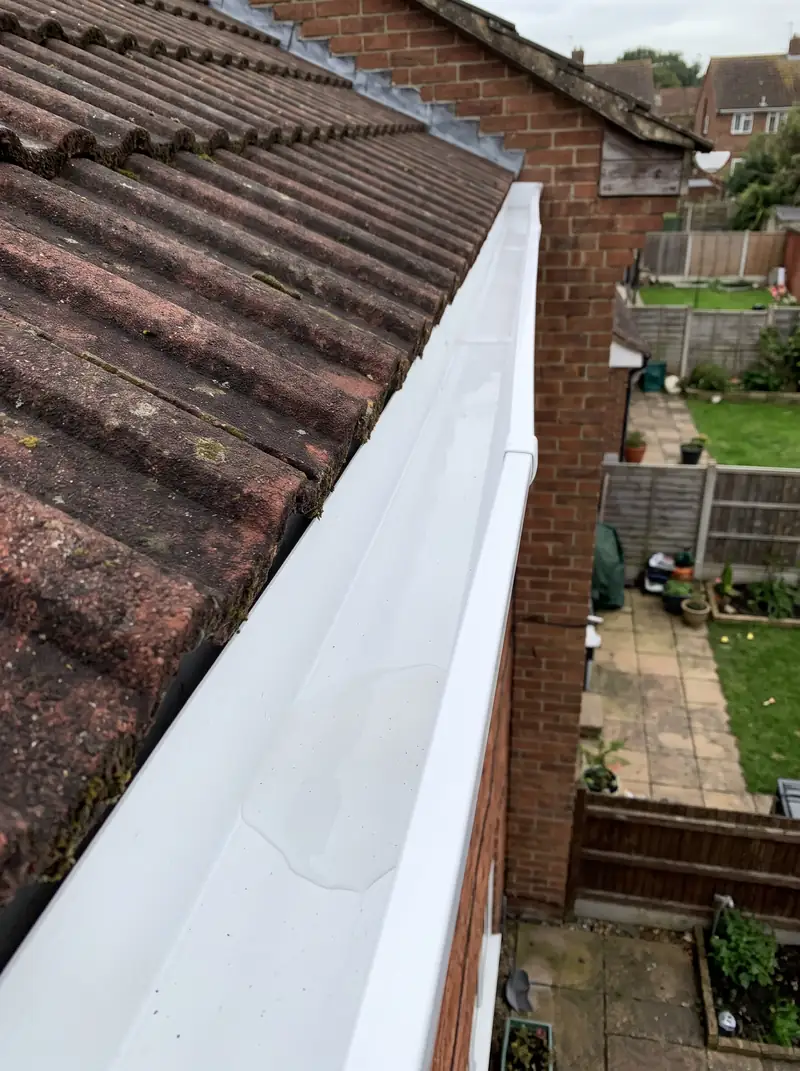
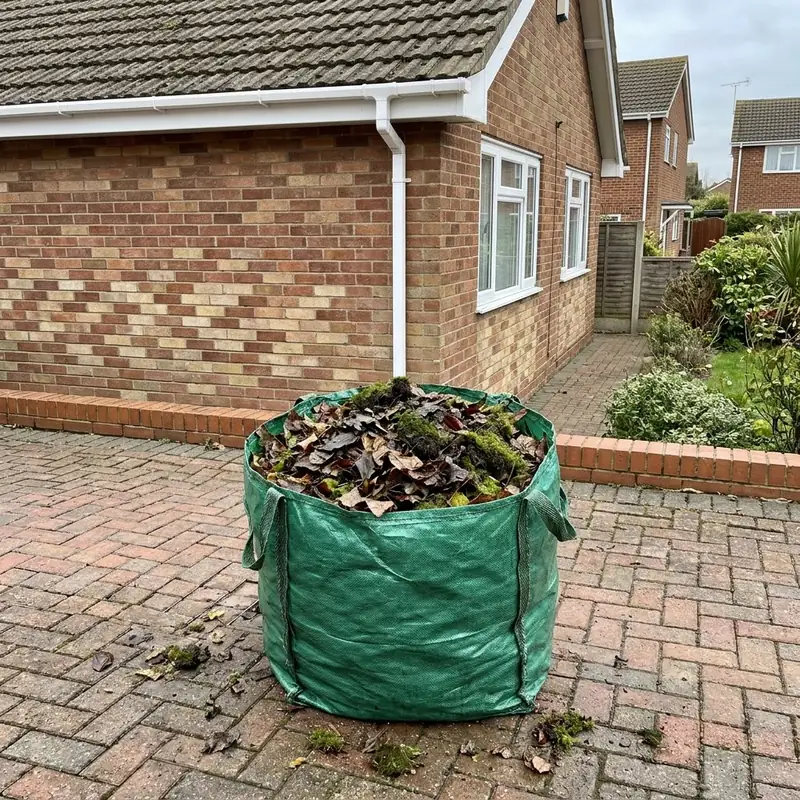
Work from the ground if you can, with a pole tool or gutter vacuum attachment. If you must use a ladder, use one in good condition at 75 degrees on firm, level ground with a stand-off so it doesn’t rest on the gutter. Clear towards the outlet, bag the debris, then run water through to check it drains.
In this guide
Should I do this at all?
For single-storey gutters with easy access, many people do. For two-storey gutters, conservatories or difficult ground, we would hire someone.
Read is it safe to clean your own gutters first. This guide assumes a bungalow or a low extension with firm, level ground below, no glass roof underneath and no overhead cables nearby. If any of that isn’t true, stop here.
What do I need?
Gloves, a gutter scoop or small trowel, a bucket with a hook or a bag, a hose or watering can, and either a pole tool or a ladder with a stand-off.
- Gloves. Gutter debris can hold sharp bits and bird droppings.
- A scoop. Plastic gutter scoops fit the gutter profile and won’t scratch it.
- Somewhere to put it. A bucket hooked to the ladder, or a garden waste bag below.
- Water. A hose or watering can to test it drains.
- Access. A pole-mounted tool or vacuum attachment from the ground is better than any ladder. If you use a ladder, it needs a stand-off so it rests on the wall, not the gutter.
- Someone else at home. Not to foot the ladder, just in case.
How do I set the ladder up?
At 75 degrees, the 1 in 4 rule, on firm, level, clean ground, with a stand-off and the ladder tied or stabilised if possible.
Do a quick check first: stiles straight, feet present and not worn, rungs sound, locks engaged. Clear any moss or leaves from where the feet will go. Position the ladder so the section you are clearing is within easy reach without leaning out, and plan to move it often. Don’t work off the top three rungs. All of this is from the ladder safety guidance LA455, written with the HSE.
How do I clear the gutter?
Start at the outlet end and work away from it, scooping debris out rather than pushing it towards the downpipe.
If you push debris along the gutter towards the outlet, you will drive it straight into the downpipe. Clear the outlet area first, by hand, then work outwards along the run. Scoop into your bucket or bag, not onto the ground, where wet silt stains paving and is slippery underfoot.
Don’t lean out. If the next bit is out of reach, climb down and move the ladder. Each section might only take a minute or two, but the climbing adds up, and the guidance suggests other equipment for anything that would keep you up a ladder for more than 30 minutes at a time.
How do I check it drains?
Run a hose or pour water in at the far end of the run and watch it reach the outlet and come out of the bottom of the downpipe.
Water should run steadily to the outlet without pooling. If it pools mid-run, the gutter may have sagged. If it reaches the outlet and backs up, the downpipe is blocked; see blocked downpipes. Check that the water leaves the downpipe at the bottom and goes into the gully or drain.
What should I leave alone?
Nests, anything that looks like asbestos cement, roof tiles, and anything you can’t reach without overreaching.
If birds are nesting in or near the gutter, leave it until they’ve gone; active nests are protected by law. See birds and bats. On older homes, grey, cement-like gutters and downpipes may contain asbestos; don’t scrape, drill or break them. See asbestos cement gutters. Don’t climb onto the roof, and don’t try to fix loose tiles from the ladder.
How long should it take?
For a small bungalow, often an hour or two, including moving the ladder and clearing up. Most of that time is moving and resetting the ladder, not scooping.
That is the catch with doing it by hand. The guidance written with the HSE uses 30 minutes at a time on a leaning ladder as the point to think about other equipment, and a whole house can take much longer. Break the job up, come down between sections, and stop if you get tired or the weather turns. Wind is a particular problem, because it catches the ladder and blows debris back at you.
Clearing up afterwards takes longer than people expect. Wet silt on a patio stains if it is left, so sweep or rinse it the same day. Rinse the windows below too: anything that splashed onto the glass dries into streaks. If you would rather not do any of it, a professional clear from the ground with a gutter vacuum is usually quicker and leaves the debris in a drum, not on the paving.
Key points
- Work from the ground if you can.
- Never rest the ladder on a plastic gutter; use a stand-off.
- Clear the outlet first and scoop away from it.
- Test with water and check it leaves the bottom of the downpipe.
- Leave nests and possible asbestos cement alone.
Quick questions
Can I use a leaf blower?
Some blowers have gutter attachments for use from the ground. They throw debris everywhere, including onto windows and the neighbour’s drive, and don’t shift wet silt well.
Can I use a pressure washer?
We wouldn’t. It sprays silt over walls and windows and can force water where it shouldn’t go. Scooping or vacuuming is cleaner.
What do I do with the debris?
Bag it. Gutter debris is mostly moss, leaves and grit, so it usually goes in garden waste. Check your council’s rules.